The receptionist’s face did something complicated when I told her I was Declan Whitfield’s wife. Not hostile. Just careful, the way a person’s expression gets careful when they’re about to say something they know is going to land badly and there’s no way around saying it.
“We already have an emergency contact on file for Mr. Whitfield,” she said, glancing down at the clipboard in front of her. “A Dana Bell. We called her about twenty minutes ago.”
I stood there in my scrubs, still smelling faintly of the hand sanitizer from my own unit three floors up, still wearing the compression socks I’d put on at five that morning for a twelve-hour shift I hadn’t finished yet, and I said the only thing my brain could produce.
“Who?”
“Dana Bell,” the receptionist repeated, a little more slowly this time, as though I might be having trouble with the English language rather than trouble with the sudden collapse of nine years of assumed marital knowledge. “She’s listed as his primary emergency contact. Would you like me to update that now that you’re here?”
I had been married to Declan for nine years. I had worked in this exact hospital system for eleven. I knew, statistically, cardiologically, professionally, exactly what “nearly passed out at work” could mean on the wide spectrum between nothing and everything, and I had spent the walk from the fourth floor down to the emergency department running through all of it in my head, the way you do when the person collapsing is someone you love instead of someone you’re charting. And now I was standing at an intake desk being told that my husband had listed a woman I had never once heard him mention, not at dinner, not at a work party, not in nine years of marriage, as the person the hospital should call first if something happened to him.
“I’d like to see my husband,” I said, because it was the only sentence I trusted myself to say cleanly.
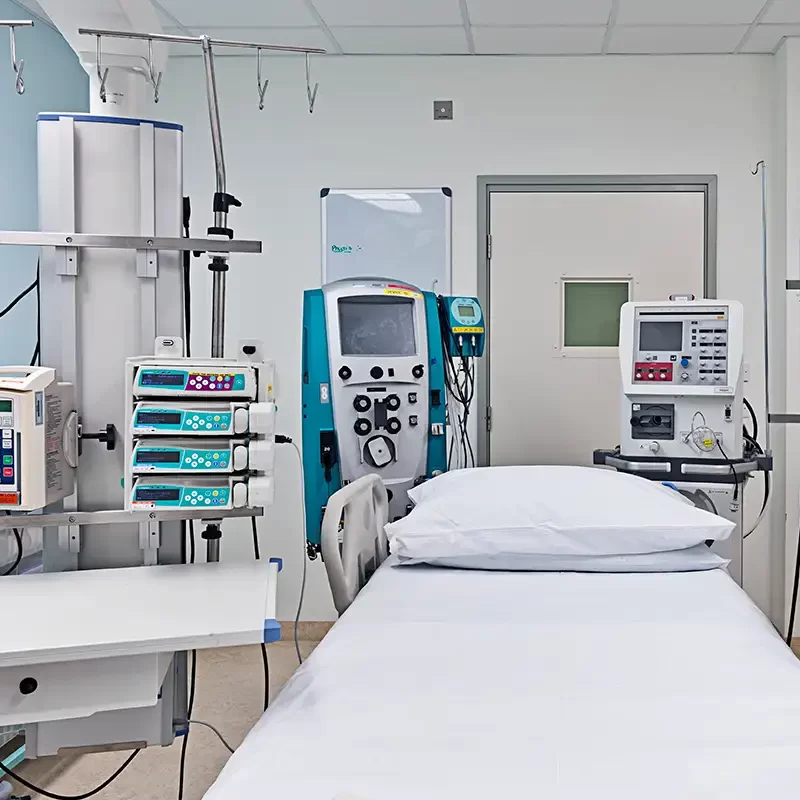
They let me back. Declan was on a gurney in bay six, hooked up to a monitor that was doing the ordinary, unremarkable things monitors do when a patient isn’t actively dying — steady green peaks, a number in the low seventies, an oxygen saturation reading that would have been boring on any other day of my career. He looked pale, tired, embarrassed in the particular way men get embarrassed about needing medical attention at all, and when he saw me come through the curtain his face did something I would spend the next several months trying to interpret. Relief. Guilt. Something underneath both of those that I didn’t have a name for yet.
And sitting in the single plastic chair beside his bed, holding a gray zip-up hoodie folded neatly across her lap, was a woman I had genuinely never seen before in my life.
“Maris,” Declan said.
“Hi,” I said, looking at him and then at her and then back at him. “So. Who’s this?”
The woman stood up quickly, the hoodie sliding off her lap and catching against her arm. “I’m Dana. Dana Bell. I work with Declan.”
“You work with him.”
“In the Denver office. We’re on the same project team.” She said it fast, the way people talk when they can feel a situation sliding sideways and they’re trying to get ahead of it with facts. “He started feeling dizzy on a call, and then he just — went gray, and I was the closest person, so I drove him here.”
“That was kind of you,” I said, and I meant it, genuinely, even through the strange buzzing static that had started somewhere behind my sternum. “Thank you for getting him here.”
“Of course.” She looked between us, clearly registering, in real time, that whatever situation she’d walked into was bigger than a coworker having a medical scare. “I should probably go.”
“You don’t have to rush off,” I said, though some small, ungenerous part of me very much wanted her to.
She stayed another fifteen minutes, mostly out of what I now understand was a kind of stunned obligation, the sense that leaving too fast would look worse than it already did. I sat in the corner, arms crossed, saying nothing, doing the thing I do at work when I need information before I let myself feel anything — collecting facts, filing them, holding my reaction at arm’s length until I had the full shape of what I was dealing with.
Before she left, Dana turned to Declan and said, quietly, like it cost her something to say it in front of me, “You need to take me off the form.”
He stared at her. “Why?”
“Because this was supposed to be temporary.”
That word landed in the room like a dropped tray. Temporary. As in, this had been a deliberate arrangement with an expected endpoint, not an accident, not a one-time convenience born out of a single dizzy spell in an office building.
I looked at Dana. She rubbed one hand over the strap of her purse, not meeting my eyes now, and the story came out of her in pieces, the way stories do when someone is being asked to explain something they never expected to have to explain to the actual wife.
The first episode, she told me, had happened months earlier, at work. Declan had needed someone to drive him to urgent care. She had done it. At the intake desk that day, the form had required an emergency contact, and Declan had put her name down because she was the one standing there, the practical choice in a moment that didn’t allow for much reflection. Later, when his cardiology office had called to update his information more permanently, he’d simply left her name on the file instead of correcting it.
He’d told Dana it was easier that way.
She had assumed, not immediately but eventually, that I knew. That this was some arrangement Declan and I had discussed, some practical decision about work-hour availability that made sense given my twelve-hour shifts and his frequent travel.
“I asked him twice whether Maris knew,” Dana said, glancing toward Declan now instead of me.
Declan looked away, toward the wall, toward the monitor, toward anywhere that wasn’t my face.
“What did he say?” I asked her directly.
Dana hesitated long enough that I already knew the answer wasn’t going to be a clean one. “He said you knew he was having some tests done.”
I laughed once. It wasn’t funny. Nothing about it was funny. But the sound came out of me anyway, sharp and involuntary, because I did, in fact, know that Declan had gotten routine bloodwork back in January. He’d mentioned it over dinner one night in the same tone he used to mention needing an oil change — a small, forgettable errand of adult maintenance. Apparently that single sentence, tossed off between bites of pasta eight months ago, had become his entire technical compliance with the concept of honesty.
“I should have asked you directly,” Dana said. “I’m sorry. I should have called you myself instead of assuming.”
“Why would you?” I said, and I meant it without cruelty — she genuinely shouldn’t have had to manage the internal architecture of somebody else’s marriage. That wasn’t her job. It had never been her job. She left a few minutes later, hoodie handed off to Declan, an apology murmured toward both of us that neither of us fully accepted or rejected.
After she left, Declan and I sat in a silence dense enough to have its own weather. The monitor kept up its small electronic noises, numbers I had spent a career learning to read instantly and without effort, numbers that meant nothing useful to me in that moment because I was working very hard not to interpret anything about my own husband through a clinical lens for possibly the first time in nine years.
Finally, he said, “You’re angry.”
“Yes.”
“At Dana?”
“No.”